Savoring Bhutan: 5 Traditional Foods to Experience on Your Yoga Retreat
In the heart of the Himalayas lies a kingdom where happiness is the ultimate currency and the air is thick with the scent of pine and incense. For those embarking on the Bhutan: Awakening to Radiance Yoga Retreat with Drishti Journeys, the experience is more than just a series of asanas; it is a profound immersion into a culture that treats every meal as a form of nourishment for the soul.
Bhutanese cuisine is as bold and vibrant as the prayer flags that flutter over its mountain passes.
Bhutan is also a destination for conscious travelers. In keeping with the mindful nature of a yoga retreat, this guide explores five iconic Bhutanese dishes that guests will experience while celebrating the rich, spicy, and soul-warming flavors of the Land of the Thunder Dragon.
1. Ema Datshi: The National Dish of Devotion
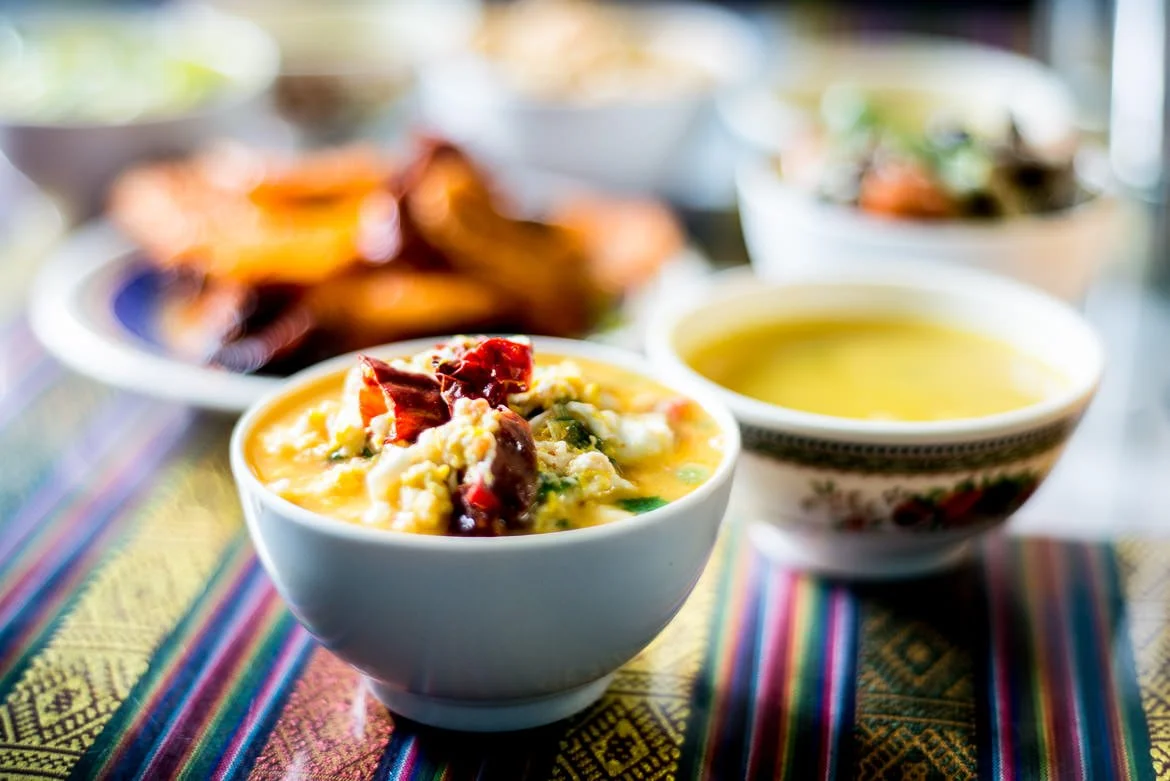
A bowl of Ema Datshi, a Bhutanese chili and cheese stew, featuring whole red chilies smothered in a thick, creamy white cheese sauce
You cannot speak of Bhutan without speaking of Ema Datshi. Often called the soul of Bhutanese cuisine, this dish is served at almost every meal, from the humblest farmhouse in the Punakha Valley to the most refined boutique resorts in Paro.
The Experience: "Ema" means chili and "Datshi" means cheese. In most cultures, chili is used as a spice or a garnish. In Bhutan, it is a vegetable. For the retreat guest, Ema Datshi is a lesson in presence. The first bite is a literal awakening—a fiery, creamy explosion that demands your full attention.
Why It Fits the Yoga Retreat: The heat of the chilies (which can be fresh green, dried red, or even white) is believed to stimulate the metabolism and clear the senses. When balanced with the locally made cow or yak milk cheese, it creates a comforting, grounding stew that pairs perfectly with the high-altitude climate. For those sensitive to spice, don’t worry—retreat chefs often prepare a milder version for international guests, focusing on the rich, savory depth of the cheese sauce.
2. Jasha Maru: The Aromatic Chicken Stew
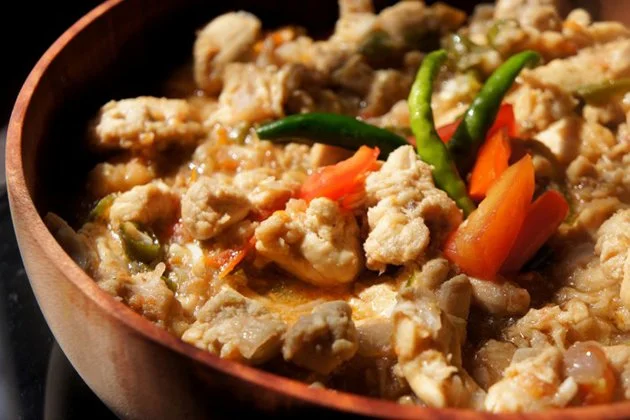
Traditional Bhutanese spicy chicken stew (Jasha Maru) with fresh herbs and chilies.
While many traditional Bhutanese dishes rely on the heavy use of fats, Jasha Maru offers a lighter, protein-rich alternative that is ideal for replenishing the body after a morning of Kundalini-inspired kriya.
The Experience: Jasha Maru is a fragrant chicken stew characterized by its heavy use of ginger and garlic. Unlike the thick, cheese-based datshis, this dish has a lighter, more broth-like consistency. The chicken is typically finely diced or minced, simmered with onions, tomatoes, and—of course—a healthy dose of Bhutanese chilies.
Why It’s a Guest Favorite: Jasha Maru is often cited by travelers as one of the most approachable and "soul-soothing" meals in the kingdom. Ginger provides a digestive boost and anti-inflammatory properties, making it an excellent recovery meal after a long day exploring the ancient dzongs (fortresses) or rafting down the Mo Chhu River.
3. Kewa Datshi: Comfort in the Clouds
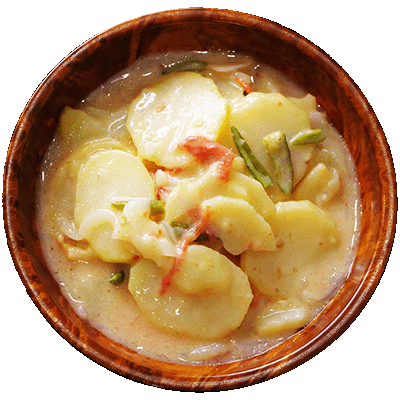
Close-up of Kewa Datshi showing soft, round potato slices coated in a rich, melted cheese gravy with aromatics, a staple Bhutanese side dish.
If Ema Datshi is the fire of Bhutan, Kewa Datshi is its warm embrace. For those who find the national dish a bit too adventurous for their palate, this potato-and-cheese specialty offers a familiar yet distinctly Himalayan comfort.
The Experience: "Kewa" translates to potato. In this dish, thin slices of locally grown potatoes are sautéed with butter and simmered in a thick cheese sauce. While a few chilies are usually tossed in for flavor, the heat is significantly dialed back. The result is a dish reminiscent of a spicy "Au Gratin," but with the earthy, organic taste of potatoes grown in the mineral-rich soil of the high valleys.
Why It Fits the Yoga Retreat: After a Vinyasa flow, the body often craves grounding carbohydrates. Kewa Datshi provides that essential "root" energy.
It is a favorite during the retreat’s village lunches, such as the authentic home-cooked meal in the idyllic village of Nobgang, where guests can taste the difference that farm-to-table freshness makes.
4. Momos: The Sacred Dumplings
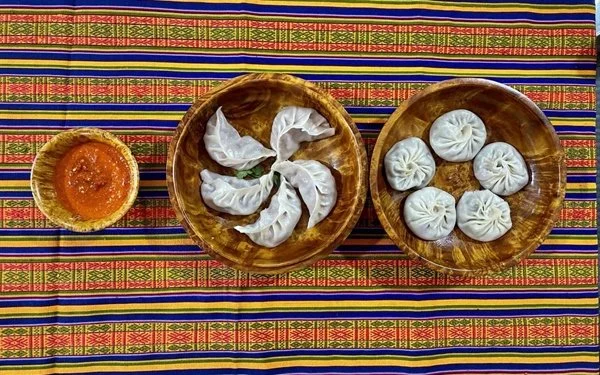
Steamed Bhutanese dumplings (momos) with a spicy red chili dipping sauce.
No journey through the Himalayas is complete without Momos. These steamed or fried dumplings are the ultimate comfort food, serving as a social bridge between Bhutan, Tibet, and Nepal.
The Experience: While momos can be filled with pork or beef, the Vegetarian and Cheese Momos are arguably the most popular among wellness travelers. These delicate parcels are often stuffed with a mixture of local cabbage, onions, and the ubiquitous datshi cheese, seasoned with a hint of Sichuan pepper. They are almost always served with Ezay, a spicy chili salsa that adds a zingy brightness to every bite.
Why They Are Special: They are often served during significant cultural gatherings or as a special welcome meal. Rather than a fast-food snack, eating Momos in Bhutan is a slow, sensory experience—appreciating the craftsmanship of the hand-pleated dough and the balance of the cooling cheese against the heat of the ezay. It is a dish that embodies the warmth of the Bhutanese people and their dedication to preparing food that delights both the eye and the palate.
5. Red Rice: The Nutty Foundation of Health
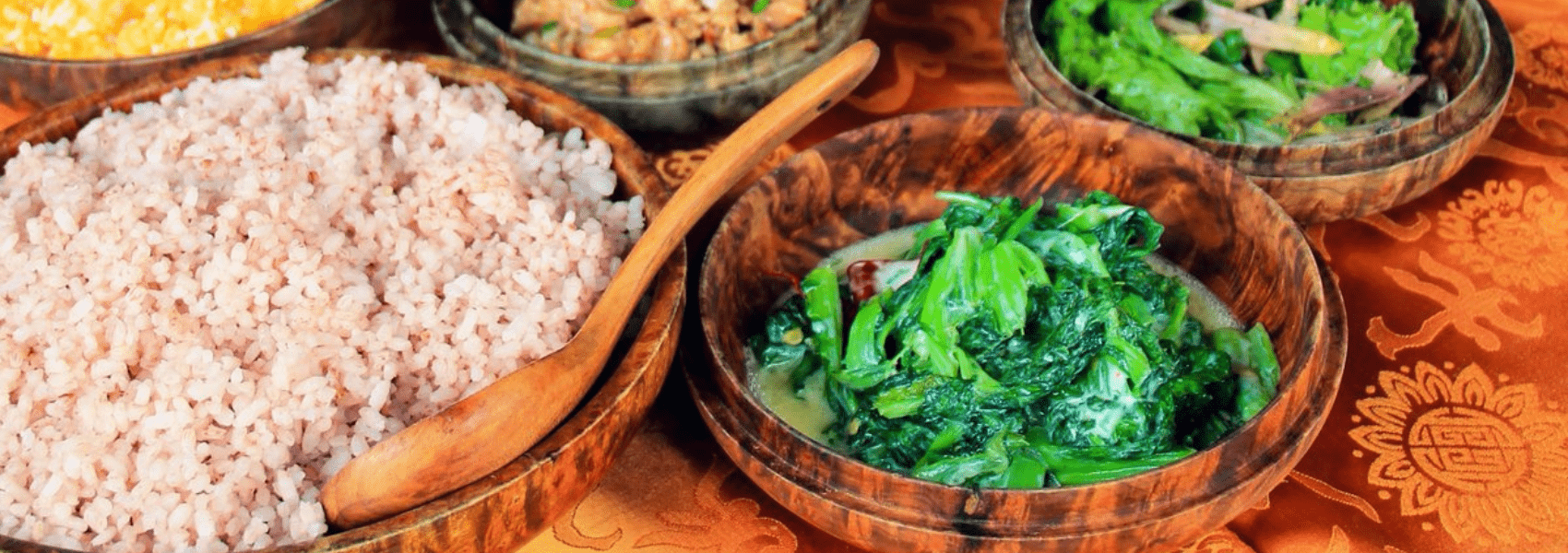
Traditional Bhutanese red rice, a nutrient-rich whole grain with a distinctive reddish hue.
While not a "dish" in the traditional sense, Bhutanese Red Rice (Eue Chum) is the cornerstone of every meal and perhaps the most nutritious element of the Bhutanese diet.
The Experience: Grown in the fertile Paro Valley at altitudes of 8,000 feet, this ancient grain is irrigated by glacier-fed waters. It is a medium-grain rice that, when cooked, turns a beautiful pale pink. It has a distinctive nutty flavor and a firm, slightly chewy texture that is far more satisfying than white rice.
Why It’s a Superfood for Yogis: Red rice is unpolished, meaning it retains its bran and germ, making it exceptionally high in fiber, minerals, and antioxidants like zinc and iron. For retreat guests, it provides a slow-release source of energy, sustaining them through long meditations and steep mountain climbs. It is the perfect "blank canvas" for the bold flavors of the datshis and stews.
Bonus: Suja (Bhutanese Butter Tea)
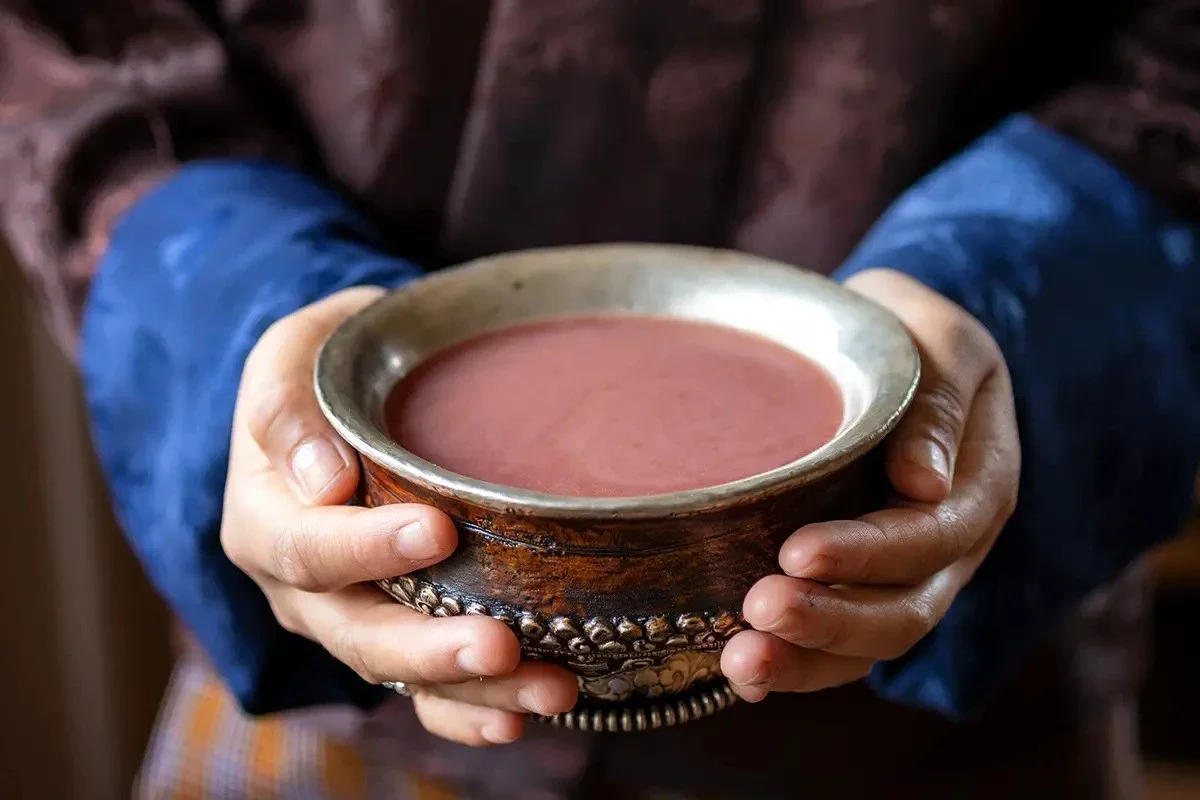
Bhutanese Suja, a savory butter tea with a creamy, frothy texture.
To truly "awaken to radiance," one must start the morning like a local. Suja is a traditional butter tea made from tea leaves, water, salt, and a generous dollop of yak or cow butter. While it may taste more like a light soup than a traditional tea, its high-fat content is designed to keep the body warm and the mind sharp in the thin mountain air.
Nourishing the Radiant Self
The Bhutan: Awakening to Radiance Yoga Retreat is an invitation to nourish yourself on every level.
By embracing the traditional flavors of Bhutan—the heat of the chili, the richness of the cheese, and the grounding nature of the red rice—guests do more than just eat; they ingest the very spirit of the Himalayas.
Whether you are savoring a picnic lunch by the riverside in Punakha or sharing a farewell cultural dinner in Paro, the food of Bhutan will stay with you long after you’ve rolled up your yoga mat. It is a cuisine that celebrates the earth, respects the body, and honors the ancient traditions of a kingdom that knows the true meaning of radiance.