The Quiet Majesty of the Boschplaat: A Night in Europe’s Darkest Corner
There is a specific kind of stillness that only exists when you are miles away from the nearest streetlight.
On the eastern tip of Terschelling, the Dutch landscape undergoes a radical transformation as the sun dips below the Wadden Sea. This is De Boschplaat, a vast nature reserve that serves as one of the last remaining bastions of true darkness in a brightly lit Europe.
Walking into the Boschplaat at night is not just an outdoor activity; it is a sensory recalibration. As the artificial glow of modern life fades, the natural world—and the universe above it—begins to speak.
What Exactly is a "Dark Sky Park"?
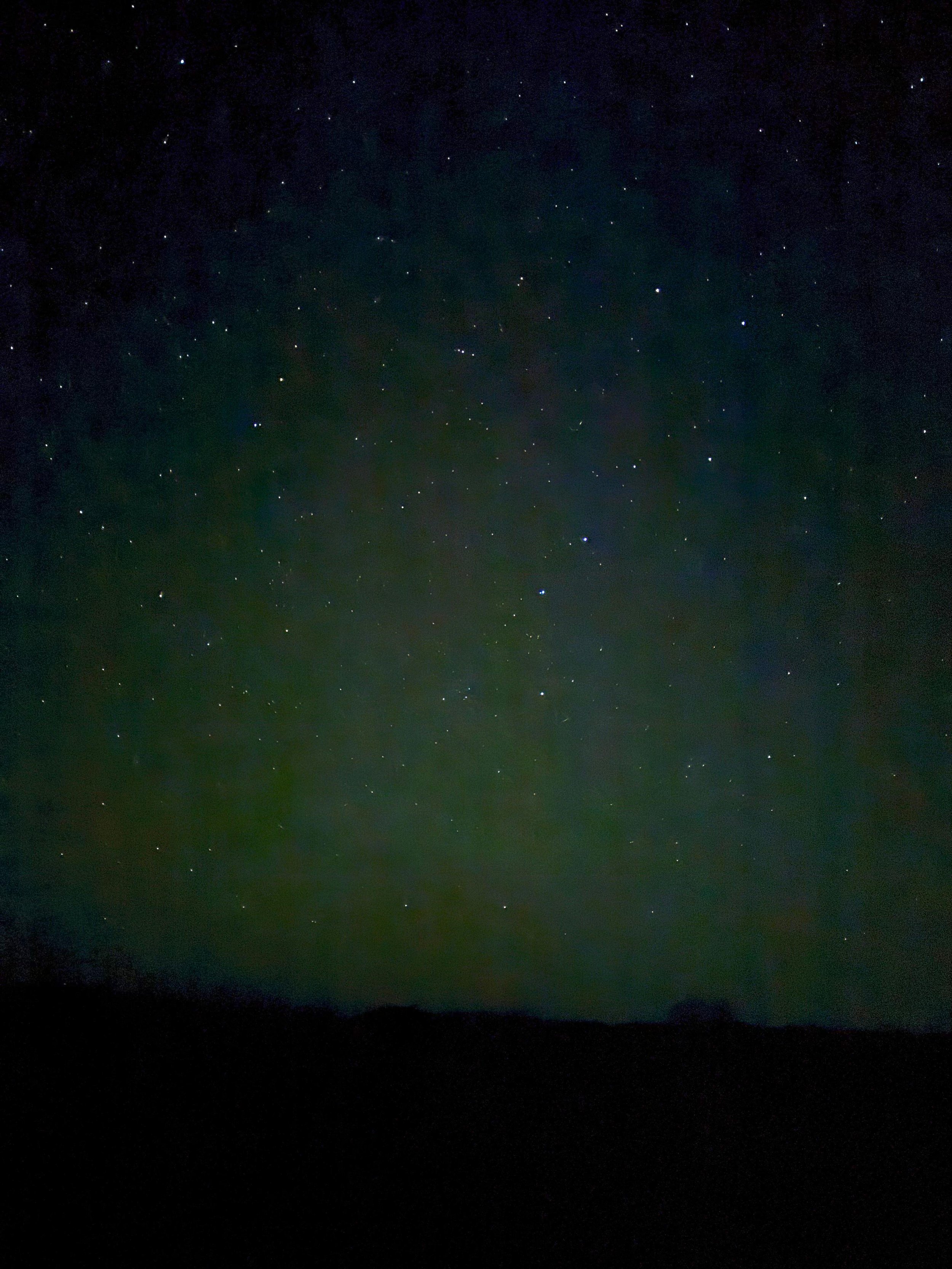
Dark Sky Tour by De Boschplaat
You may have seen the term "Dark Sky Park" on maps or signs, but it is much more than a local nickname.
It is a prestigious international certification awarded by the International Dark-Sky Association (IDA).
To be recognized as an International Dark Sky Park (IDSP), a location must possess an exceptional or distinguished quality of starry nights and a nocturnal environment that is specifically protected for its scientific, natural, educational, or cultural heritage.
Why the Boschplaat?
In 2015, De Boschplaat became the first location in the Netherlands to receive this title. It earned the status because:
Minimal Light Pollution: The area is far enough from mainland industrial hubs and cities like Harlingen or Leeuwarden that the "sky glow" is almost non-existent.
Public Access: While the park is protected, it remains accessible for people to experience the darkness responsibly.
Environmental Commitment: The island of Terschelling has made active efforts to use "nature-friendly" street lighting (often amber-hued) to prevent light spill into the reserve.
The darkness is vital not just for stargazers, but for the local ecosystem. Many of the millions of birds that traverse the East Atlantic Flyway rely on the stars for navigation; artificial light can disorient them, leading to exhaustion or predation. Terschelling is part of a growing global movement to "reclaim the dark."
While the Boschplaat was a pioneer in the Netherlands (joined later by Lauwersmeer National Park on the mainland), there are over 100 Dark Sky Parks worldwide.
We participated in A Dark Sky Tour led by local experts who function as much as naturalists as they do astronomers. Our guide began the evening by grounding us in the physical reality of the Wadden Sea ecosystem, a UNESCO World Heritage site.
Before pointing out a single star, we discussed the tides. Terschelling’s landscape is a living, breathing entity governed by the gravitational pull of the moon. Our guide explained how the rising and falling waters dictate the lives of everything on the island. At the Boschplaat, the salt marshes are flooded twice a day, creating a unique "brackish" environment where only the hardiest plants can survive.
During our recent tour, as our eyes adjusted—a process that takes about 20 to 30 minutes for the human eye to fully engage its "night sensors"—the sky revealed layers of depth usually hidden by city haze.
The Great Bear (Ursa Major)
While many call the most famous shape in the northern sky the "Big Dipper," it is actually part of Ursa Major, the Great Bear. In the absolute darkness of the Boschplaat, you can see the faint stars that form the bear’s "legs" and "head," stretching across a massive portion of the sky.
The "pointer stars" at the edge of the dipper's bowl lead your eye to Polaris (the North Star). For the sailors who once navigated the treacherous North Sea around Terschelling, this star was their only constant—a fixed point in a moving world.
Orion the Hunter
As the night progressed, Orion moved into view. At the Boschplaat, Orion isn't just a few bright points; he is a masterpiece of stellar anatomy.
Betelgeuse: The reddish star at his shoulder.
Rigel: The icy blue star at his foot.
The Nebula: Beneath the three stars of his belt hangs his "sword." In a Dark Sky Park, you don't need a telescope to see that the middle "star" of the sword is actually a fuzzy patch of light—the Orion Nebula, a massive cloud of gas and dust where new stars are being born.
The Island Experience: Why Darkness Matters
There is a profound psychological shift that happens when you stand in a place like the Boschplaat.
In our modern lives, we are constantly "on," bathed in the blue light of screens and the buzz of electricity.
Entering the Dark Sky Park is an act of sensory deprivation that leads to spiritual expansion. When the horizon disappears, you lose your sense of self-importance. You aren't just a person standing on a Dutch island; you are a passenger on a planet spinning through a galaxy of 200 billion stars.
This sense of "awe" is what we seek to integrate into our time on Terschelling during the Island Flow: A Restorative Terschelling Nature and Yoga Retreat. Whether we are practicing yoga on the beach during the day or standing silently under the Milky Way at night, the goal is the same: to reconnect with the natural rhythms that the modern world often makes us forget.
If You Visit
If you find yourself on Terschelling and wish to visit the Boschplaat at night, remember that the darkness is a gift to be respected.
Avoid white lights: If you must use a flashlight, use a red filter or a red LED. Red light does not "bleach" your night vision.
Check the Moon: For the best stargazing, aim for the days around the New Moon. If the Moon is full, the sky will be beautiful, but the faint stars and the Milky Way will be washed out by the Moon’s light.
Listen: The Boschplaat is alive at night. Between your observations of the stars, listen for the call of the curlew or the distant roar of the North Sea.
The stars have been there for billions of years. At the Boschplaat, we simply get the chance to finally see them.